How to Choose a Life Science System Integrator Partner
How to Choose a Life Science System Integrator Partner
Choosing a life science systems integrator requires more than assessing engineering capability or comparing project costs. Manufacturers need a partner that understands regulated production, industrial automation, operational data, IT and OT integration, validation, cybersecurity and the practical realities of delivering technology projects within active manufacturing facilities.
The right systems integrator should be able to connect control systems, equipment, data historians, industrial data platforms, software and analytics solutions as part of a coordinated digital manufacturing strategy. They should also help the organisation maximise the value of its operational data, manage the lifecycle of critical systems and build a scalable foundation for future growth.
Réalta Technologies supports pharmaceutical, biopharmaceutical, medical device and other life science manufacturers across Ireland, Europe and the United States. Through advanced automation, data infrastructure, digital transformation, analytics, software development, validation and managed support, Réalta Technologies helps customers deliver reliable, compliant and scalable manufacturing technology projects.
What Should a Life Science Manufacturer Look for in a Systems Integrator?
A life science systems integrator should combine technical expertise with practical experience in regulated manufacturing.
Technology projects within pharmaceutical, biopharmaceutical and medical device facilities can affect process performance, production availability, product quality, regulated records and data integrity. The systems integrator must therefore be able to work effectively with engineering, operations, IT, quality assurance, validation, data, cybersecurity and business stakeholders.
A suitable systems integrator should demonstrate relevant life science experience, a structured delivery approach and the ability to support systems throughout their operational lifecycle. They should understand how automation, data infrastructure, software, reporting and analytics work together within a connected manufacturing environment.
A life science systems integrator should provide:
- Proven GMP-regulated manufacturing experience
- Computer System Validation and quality capability
- Industrial automation and systems integration expertise
- OT cybersecurity and secure IT/OT integration
- Industrial data historian and data infrastructure expertise
- Structured project and shutdown planning
- Long-term lifecycle management and managed support
- International delivery capability where required
Réalta Technologies provides services across Advanced Automation, Digital Transformation, AI & Advanced Analytics, Software Development, Compliance, Validation & Quality, and Managed Services & Support. This broad capability enables Réalta Technologies to consider the complete manufacturing technology environment rather than approaching individual systems as isolated projects.
Why Is Experience in Regulated Life Science Manufacturing Essential?
Technical capability alone does not make a company the right systems integrator for a regulated life science facility.
Changes to control logic, software, infrastructure, system interfaces, user access or data flows may affect validated processes and regulated records. Projects must therefore be delivered within the manufacturer’s approved quality, validation, change-control and cybersecurity procedures.
Réalta Technologies works with customers across pharmaceutical, biopharmaceutical, medical device and wider regulated manufacturing environments. The Réalta Technologies team understands the importance of controlled documentation, risk-based testing, traceability, data integrity, system availability and cross-functional approval.
This experience is especially valuable when projects must be completed during planned shutdowns or restricted production windows. Technical work, documentation, validation and stakeholder approvals must all be carefully coordinated so that systems can return to service safely and on schedule.
Key takeaway
A systems integrator working in life science manufacturing should understand:
- GMP requirements
- Computer System Validation
- Data integrity
- Change control
- Controlled documentation
- Production and shutdown constraints
- Quality and validation approval processes
What Does a Life Science Systems Integrator Do?
A systems integrator brings together the different technologies, systems and stakeholders required to create a connected and reliable manufacturing environment.
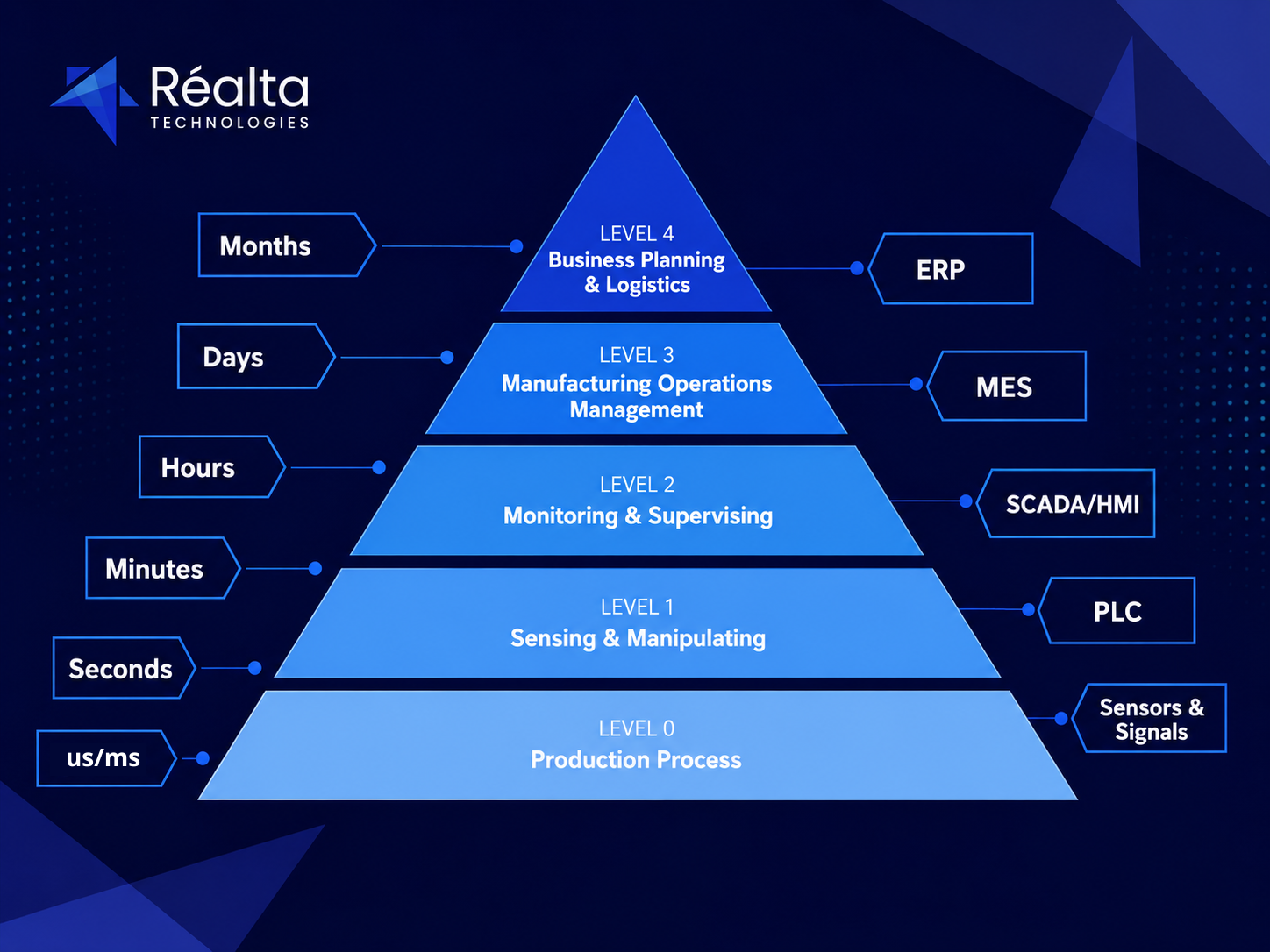
Within a life science facility, this can include integrating production equipment, PLCs, SCADA platforms, distributed control systems, data historians, industrial data platforms, databases, reporting applications, cloud environments and custom software.
The role extends beyond installing or configuring technology. A systems integrator must understand how information moves between systems, how users interact with that information and how the complete architecture supports production, quality, maintenance, compliance and business decision-making.
Réalta Technologies provides industrial automation and systems integration services while also supporting the wider data and software environment surrounding manufacturing operations. This allows customers to address control, connectivity, data infrastructure, analytics and lifecycle support through a coordinated approach.
Can the Systems Integrator Connect Automation, IT and Operational Data?
Modern life science manufacturing depends on reliable integration between operational technology and information technology.
Operational technology includes equipment, sensors, PLCs, SCADA systems, DCS platforms and other systems that monitor or control manufacturing processes. Information technology includes enterprise networks, databases, cloud services, reporting platforms and business applications.
Connecting these environments can improve operational visibility, reporting and decision-making. It can also introduce new requirements around cybersecurity, data ownership, network design, access control and support responsibilities.
Réalta Technologies combines industrial automation expertise with IT systems, data infrastructure, software development and analytics capability. This enables the Réalta Technologies team to work across traditional IT and OT boundaries and design secure, reliable connections between manufacturing systems and the applications that use their data.
A capable systems integrator should be able to explain how the proposed architecture will improve access to information without compromising security, compliance or production availability.
Key takeaway
Effective IT and OT integration should deliver:
- Secure connectivity between manufacturing and business systems
- Reliable movement of operational data
- Clear ownership and support responsibilities
- Improved access to production information
- Strong access controls and cybersecurity
- Scalable infrastructure for reporting and analytics
How Can a Systems Integrator Help Maximise the Value of Operational Data?
Life science manufacturers generate significant volumes of operational data through production equipment, control systems, environmental monitoring platforms, laboratory systems and industrial data historians.
However, collecting data does not automatically create value.
Operational data may be distributed across disconnected systems, recorded in inconsistent formats or lack the context required for meaningful analysis. Users may also depend on spreadsheets or manual processes to access information that already exists elsewhere in the organisation.
A systems integrator can help connect these sources, improve data quality and create a more consistent structure for operational information. This can make data easier to find, understand and use across engineering, operations, maintenance, quality and management teams.
Réalta Technologies helps customers collect, contextualise, integrate and visualise operational data. By improving the structure and accessibility of manufacturing information, Réalta Technologies can help customers reduce manual reporting, identify process trends, investigate deviations and make faster, better-informed decisions.
The objective is not simply to collect more data. It is to ensure the right data is available to the right people, with the context required to support meaningful action.
Manufacturers can maximise operational data by:
- Connecting data from equipment, automation and business systems
- Standardising data structures and naming conventions
- Adding operational and asset context
- Improving data quality and accessibility
- Reducing manual spreadsheet-based reporting
- Creating trusted dashboards and reporting tools
- Supporting predictive and advanced analytics
- Preparing data infrastructure for future AI initiatives
Can the Systems Integrator Design and Implement a Manufacturing Data Strategy?
A manufacturing data strategy defines how an organisation will collect, govern, contextualise, store, access and use operational information.
Without a clear strategy, individual technology projects can create additional data silos or duplicate existing capabilities. Different sites and departments may adopt incompatible approaches, making information more difficult to manage and scale.
A well-designed data strategy should begin with business and operational priorities. It should identify which decisions the organisation wants to improve, which data is required and how that information will be made accessible, reliable and secure.
The strategy should also consider data ownership, governance, architecture, naming conventions, system integration, historian requirements, reporting, analytics, cybersecurity, validation and lifecycle management.
Réalta Technologies works with customers to assess their existing technology and data environments before developing practical roadmaps for improvement. This can include identifying priority use cases, defining the future architecture and planning phased implementations that demonstrate value without attempting to transform every system at once.
By connecting data strategy with operational goals, Réalta Technologies helps manufacturers build infrastructure that supports immediate reporting and visibility requirements while also preparing for advanced analytics, artificial intelligence and future digital manufacturing initiatives.
A manufacturing data strategy should define:
- Business and operational objectives
- Priority data use cases
- Existing systems and data sources
- Future data architecture
- Data ownership and governance
- Contextualisation and naming standards
- Historian and storage requirements
- Reporting and analytics requirements
- Cybersecurity and access controls
- Validation and compliance requirements
- Lifecycle management responsibilities
- A phased implementation roadmap
Does the Systems Integrator Understand Industrial Data Historians?
Industrial data historians play a critical role in life science manufacturing. They collect and store time-series data from equipment, control systems and production processes, creating an important source of information for operations, engineering, investigations, reporting and batch-related activities.
A systems integrator working with historian environments should understand more than software installation. The integrator must consider interfaces, buffering, archive management, asset structures, redundancy, user access, data retention, reporting dependencies and the applications that consume historian data.
Réalta Technologies is an AVEVA PI Endorsed System Integrator with specialist expertise in process historians, manufacturing data infrastructure and the integration of operational data across regulated environments.
The Réalta Technologies technology ecosystem also includes AVEVA, Ignition, HighByte, Canary, Seeq and Databricks. These platforms can support different stages of the data lifecycle, including collection, contextualisation, storage, visualisation, analytics and reporting.
This combination of historian and wider data-infrastructure expertise allows Réalta Technologies to help customers consider how operational information will be used throughout the organisation rather than focusing only on its initial collection.
Historian expertise should include:
- Data collection and interface configuration
- Interface buffering and data recovery
- Archive management and retention
- Asset structures and contextualisation
- High availability and redundancy
- User access and security
- Reporting and application dependencies
- System validation
- Backup and disaster recovery
- Software and infrastructure lifecycle management
How Should Historian and Data-System Lifecycle Management Be Approached?
Industrial data historians and manufacturing data systems require active lifecycle management.
Software versions, server infrastructure, operating systems, interfaces and third-party dependencies all change over time. Without a structured lifecycle plan, critical systems can become increasingly difficult to maintain, secure, validate and support.
Manufacturers should understand which systems are approaching end of support, which components create operational risk and which upgrades will be required over the coming years. This allows projects to be planned around production schedules rather than being triggered by unexpected failures or urgent cybersecurity concerns.
Réalta Technologies can help customers assess the current state of historian and data infrastructure, identify lifecycle risks and develop practical upgrade or migration roadmaps.
The assessment should consider system criticality, software and hardware support, operating-system compatibility, interface dependencies, cybersecurity requirements, data-retention obligations, validation status and business-continuity arrangements.
A planned lifecycle-management approach can reduce emergency interventions, improve system reliability and make future upgrades more predictable.
Historian lifecycle management should assess:
- Software support and end-of-life dates
- Server and hardware condition
- Operating-system compatibility
- Interface and application dependencies
- Cybersecurity vulnerabilities
- Data retention requirements
- Backup and recovery capability
- Redundancy and business continuity
- Validation status
- Future reporting and analytics requirements
- Upgrade and migration timelines
When Should a Life Science Manufacturer Upgrade Its Historian or Data Infrastructure?
An upgrade may be required when systems are running on unsupported software, outdated hardware or deprecated operating systems. It may also become necessary when existing infrastructure can no longer support growing data volumes, new integrations, cybersecurity requirements or the organisation’s analytics strategy.
Other warning signs include unreliable interfaces, limited redundancy, recurring performance issues, manual workarounds and difficulty accessing data across multiple sites or departments.
The decision should not be based solely on system age. The organisation should assess operational risk, supportability, compliance, security, performance and future business requirements.
Common signs that an upgrade is required include:
- Software or hardware is no longer supported
- Operating systems are approaching end of life
- Interfaces are becoming unreliable
- Performance is declining
- Cybersecurity risks cannot be addressed
- Redundancy and recovery arrangements are inadequate
- Data volumes are exceeding current capacity
- New systems cannot be integrated effectively
- Reporting depends on manual workarounds
- The current environment cannot support analytics or AI objectives
A systems integrator can help determine whether the best approach is an in-place upgrade, infrastructure refresh, phased migration or wider redesign of the data architecture.
Réalta Technologies combines historian expertise with automation, infrastructure, validation and project-management capability. This means both the technical upgrade and its wider operational implications can be considered as part of one coordinated project.
How Does Réalta Technologies Approach Complex Historian Upgrades?
Detailed preparation is essential when upgrading a critical historian or manufacturing data system.
In one life science PI System upgrade project, Réalta Technologies supported a site where the historian was essential to operations and batch release. The existing system was operating on legacy software, hardware and operating systems, while more than 50 interfaces were sending data to the platform.
The upgrade had to be completed during a two-week shutdown. The customer required zero data loss, less than 24 hours of data unavailability and full validation before the end of the shutdown period.
Réalta Technologies developed a phased approach covering preparation, execution and validation. This included detailed backward planning, document migration, infrastructure preparation, interface verification, data restoration, software upgrades and close coordination with quality and validation teams.
The project was completed with:
- Zero data loss
- Nine hours of data unavailability
- More than 50 interfaces successfully restored
- Full system validation completed before the end of the shutdown period
- Updated software, hardware and operating-system infrastructure
This demonstrates why manufacturers should assess a systems integrator’s project planning, historian expertise, validation experience and stakeholder coordination alongside its core engineering capability.
Can the Systems Integrator Work With Existing and Legacy Systems?
Most established life science facilities contain a combination of modern technology and legacy infrastructure.
New systems may need to connect with existing PLCs, SCADA platforms, distributed control systems, historians, databases, laboratory applications, reporting tools and specialist production equipment.
Replacing every existing system is rarely practical or necessary. A systems integrator should first assess the current environment, understand dependencies and determine which systems can be retained, modernised, upgraded or integrated.
Réalta Technologies takes a practical approach to legacy-system integration. The Réalta Technologies team assesses software versions, infrastructure, interfaces, industrial networks, equipment constraints, data flows and operational requirements before recommending a solution.
A legacy-system assessment should identify:
- Business-critical systems
- Unsupported hardware and software
- Integration dependencies
- Cybersecurity risks
- Validation impact
- Data and reporting dependencies
- Upgrade priorities
- Opportunities for phased modernisation
- Systems that can be safely retained
The objective is to improve reliability and connectivity without creating unnecessary disruption, complexity or project risk.
How Should Validation Be Built Into Systems Integration Projects?
Validation should be considered from the beginning of any GxP-relevant technology project.
Waiting until implementation is complete can create documentation gaps, duplicated testing and delays to system approval. The systems integrator should work with the customer’s quality and validation teams to understand the system’s intended use, critical functions, data flows and associated risks.
Réalta Technologies’ Compliance, Validation & Quality services help customers align technical implementation with approved validation and quality requirements.
The project should establish clear relationships between user requirements, functional specifications, design decisions, configuration, risk assessments and testing evidence. Documentation and testing should be proportionate to the system’s intended use and risk.
No technology is automatically compliant. Compliance depends on how the system is selected, designed, configured, tested, documented, operated and maintained within the manufacturer’s quality system.
Data-integrity controls should address:
- Data ownership and accountability
- Accurate system time
- Role-based access
- Audit trails
- Data transfer and interface monitoring
- Backup and recovery
- Data retention
- Electronic records and signatures
- Review and approval workflows
- Protection against unauthorised changes
How Should Data Integrity Be Managed?
Manufacturing systems may create, transfer or store information used for production monitoring, quality review, investigations and batch release.
The systems integrator should understand how regulated information is generated, attributed, time-stamped, transferred, modified, retained, reviewed and protected.
Relevant controls may include user roles, access permissions, audit trails, system clocks, backup and recovery, data retention, electronic records, electronic signatures and interface monitoring.
Réalta Technologies’ combination of automation, data infrastructure, analytics and validation expertise enables these requirements to be considered across the entire data pathway.
Data integrity cannot be addressed solely within the final application or report. It depends on the complete journey from the originating equipment or control system through interfaces, historians and databases to the platform where the information is reviewed or used.
What Cybersecurity Capabilities Should a Systems Integrator Provide?
Cybersecurity should be considered throughout the lifecycle of connected manufacturing systems.
Life science facilities may contain legacy equipment, specialist vendor platforms and validated systems that cannot be patched or modified in the same way as conventional IT infrastructure.
A systems integrator should be able to work within the manufacturer’s cybersecurity framework and support secure network design, segmentation, access controls, remote-support procedures, backup arrangements and recovery planning.
Réalta Technologies brings together automation, networking, data infrastructure, software and managed support capabilities. This enables cybersecurity to be considered alongside production availability, compliance, validation and operational performance.
The final architecture should balance security requirements with the practical operating and support needs of the manufacturing facility.
Can the Systems Integrator Deliver Across Ireland, Europe and the United States?
Many life science organisations operate across multiple facilities, regions and time zones.
A systems integrator with international delivery capability can provide greater flexibility, broader access to specialist expertise and more consistent support across global manufacturing operations.
Réalta Technologies is headquartered in Cork, Ireland, with teams supporting customers across Ireland, Europe, the United States and India. This multi-region structure allows Réalta Technologies to collaborate closely with local stakeholders while extending project and support coverage across time zones.
For international manufacturers, this can help maintain project momentum, support multi-site programmes and establish consistent technical and delivery standards across different locations.
International delivery can provide:
- Access to a wider pool of specialist expertise
- Extended time-zone coverage
- More consistent support across global sites
- Faster project collaboration
- Common engineering and delivery standards
- Support for multi-site programmes
- Greater flexibility during critical project periods
Global capability should still be supported by close engagement with each facility’s engineering, IT, quality, validation and production teams.
What Ongoing Support Is Available After Implementation?
A successful systems integration project does not end when the system is commissioned or released for operational use.
Manufacturers must consider how the complete environment will be monitored, maintained, updated and supported throughout its lifecycle.
Réalta Technologies’ Managed Services & Support offering helps customers maintain critical automation, historian, data infrastructure and manufacturing technology systems. Support can include proactive monitoring, troubleshooting, technical assistance, lifecycle planning and access to specialist expertise.
The appropriate model will depend on system criticality, operating hours, geographic footprint and the capabilities available within the customer’s internal team.
Manufacturers should ask prospective systems integrators how incidents will be managed, what response commitments are available, how lifecycle risks will be identified and whether support can be delivered across multiple time zones.
What Evidence Should Manufacturers Request From a Systems Integrator?
A potential systems integrator should be able to demonstrate relevant expertise through case studies, technical endorsements, project examples and measurable customer outcomes.
Manufacturers should look for evidence of experience in regulated facilities, complex systems integration, data-strategy development, historian projects, data infrastructure, shutdown-based delivery, validation and multi-stakeholder programmes.
Technology relationships can also provide evidence of specialist capability. Réalta Technologies is an AVEVA PI Endorsed System Integrator and works with technology partners including AVEVA, Ignition, HighByte, Canary, Seeq and Databricks.
These credentials should be considered alongside practical delivery experience. A systems integrator should be able to explain how the proposed technologies support the customer’s operational priorities, existing architecture and long-term digital manufacturing strategy.
Why Choose Réalta Technologies as Your Life Science Systems Integrator?
Réalta Technologies combines advanced automation, data infrastructure, data analytics, software development, validation and project-delivery expertise within one international team.
Why life science manufacturers choose Réalta Technologies:
- One partner for automation, data infrastructure, software, validation and managed services
- Proven experience delivering projects in GMP-regulated pharmaceutical and life science environments
- Expertise spanning PLC, SCADA, DCS, historians, IT/OT integration, analytics and cybersecurity
- International delivery teams supporting manufacturers across Ireland, Europe and the United States
- A lifecycle approach that supports assessment, implementation, validation, upgrades and long-term support
Réalta Technologies supports manufacturers throughout the complete project lifecycle, from consultancy, assessment and strategy development through to design, implementation, testing, validation, handover and ongoing support.
Experience in regulated manufacturing enables Réalta Technologies to balance technical progress with production continuity, quality requirements, data integrity, cybersecurity and long-term supportability.
Réalta Technologies does not treat automation, data infrastructure or analytics as isolated areas. The Réalta Technologies team considers how control systems, operational data, software, infrastructure and people must work together to deliver meaningful manufacturing outcomes.
For life science manufacturers across Ireland, Europe and the United States, this provides access to a systems integrator that can support immediate technical requirements while also helping shape a long-term digital manufacturing and data strategy.
Frequently Asked Questions
What does a life science systems integrator do?
A life science systems integrator connects and supports the automation, data, software and digital systems used across pharmaceutical, biopharmaceutical and medical device manufacturing. This can include control systems, process historians, industrial data platforms, reporting tools, analytics solutions and IT/OT integration.
What systems integration services does Réalta Technologies provide?
Réalta Technologies provides advanced automation, data infrastructure, digital transformation, AI and advanced analytics, software development, compliance and validation support, project delivery and managed services for regulated manufacturing environments.
How can Réalta Technologies help manufacturers maximise operational data?
Réalta Technologies helps manufacturers connect data sources, contextualise operational information and make data more accessible for reporting, analytics and decision-making. This can reduce manual reporting, improve process visibility and create stronger foundations for artificial intelligence and advanced analytics.
Can Réalta Technologies help design a manufacturing data strategy?
Yes. Réalta Technologies can assess the existing manufacturing data environment, identify priority business and operational use cases, define future architecture and develop a phased roadmap for improving data infrastructure, governance, reporting and analytics.
Is Réalta Technologies an AVEVA PI Endorsed System Integrator?
Yes. Réalta Technologies is an AVEVA PI Endorsed System Integrator with experience in PI System projects, process historians, industrial data infrastructure and the integration of operational manufacturing data.
When should a manufacturing data historian be upgraded?
A historian should be assessed for upgrade when its software, hardware or operating system is approaching end of support, when performance or reliability is declining, or when the existing environment cannot meet new integration, cybersecurity, reporting or analytics requirements.
Can Réalta Technologies support historian and data-system lifecycle management?
Yes. Réalta Technologies can assess historian and data-system infrastructure, identify support and lifecycle risks, develop upgrade roadmaps and support the implementation, migration and validation of modernised environments.
Can Réalta Technologies work with legacy manufacturing systems?
Yes. Réalta Technologies can assess existing control, historian and data infrastructure environments and develop practical modernisation or integration plans. The recommended approach will depend on operational risk, production requirements, system dependencies and long-term strategy.
Can Réalta Technologies support life science projects across multiple regions?
Yes. Réalta Technologies supports customers across Ireland, Europe and the United States through international delivery teams, providing access to specialist expertise and extended support coverage across multiple time zones.
Does Réalta Technologies provide ongoing support after implementation?
Yes. Réalta Technologies provides Managed Services & Support for automation, historians, data infrastructure and related manufacturing systems. The support model can be tailored to the system’s criticality, operating requirements and the customer’s internal capabilities.
Conclusion
Choosing a life science systems integrator is a strategic decision that can affect production reliability, compliance, data integrity and long-term digital transformation.
The right systems integrator should combine advanced automation expertise with data infrastructure, operational analytics, software, validation, cybersecurity, project delivery and lifecycle support.
Réalta Technologies brings these capabilities together for pharmaceutical, biopharmaceutical and medical device manufacturers across Ireland, Europe and the United States.
By working with Réalta Technologies from early-stage assessment and data-strategy development through to implementation and ongoing support, manufacturers can reduce project risk, improve system reliability, maximise the value of operational data and create a stronger foundation for connected, data-driven manufacturing.
Contact Réalta Technologies to discuss how our systems integration, data infrastructure and digital manufacturing expertise can support your next life science project.
💻 https://realtatechnologies.com
📞 IRL: +353 21 243 9113 | US: +1 302 509 4401

What does a systems integrator do in regulated manufacturing?
What does a systems integrator actually do in a regulated manufacturing environment? We explore the role across automation, operational data infrastructure, analytics, testing, lifecycle management

How to Choose a Life Science System Integrator Partner
Choosing the right pharmaceutical automation partner requires more than comparing technology and costs. This guide explains how manufacturers in Ireland, the EU and the US
Benefits of Project management when deploying GXP applications in highly regulated manufacturing environment
Manufacturing projects involve multiple stakeholders, complex technologies and strict timelines. Discover how an end-to-end project management service helps reduce risk, improve collaboration and deliver successful
How to Choose a Life Science System Integrator Partner
Choosing a life science systems integrator requires more than assessing engineering capability or comparing project costs. Manufacturers need a partner that understands regulated production, industrial automation, operational data, IT and OT integration, validation, cybersecurity and the practical realities of delivering technology projects within active manufacturing facilities.
The right systems integrator should be able to connect control systems, equipment, data historians, industrial data platforms, software and analytics solutions as part of a coordinated digital manufacturing strategy. They should also help the organisation maximise the value of its operational data, manage the lifecycle of critical systems and build a scalable foundation for future growth.
Réalta Technologies supports pharmaceutical, biopharmaceutical, medical device and other life science manufacturers across Ireland, Europe and the United States. Through advanced automation, data infrastructure, digital transformation, analytics, software development, validation and managed support, Réalta Technologies helps customers deliver reliable, compliant and scalable manufacturing technology projects.
What Should a Life Science Manufacturer Look for in a Systems Integrator?
A life science systems integrator should combine technical expertise with practical experience in regulated manufacturing.
Technology projects within pharmaceutical, biopharmaceutical and medical device facilities can affect process performance, production availability, product quality, regulated records and data integrity. The systems integrator must therefore be able to work effectively with engineering, operations, IT, quality assurance, validation, data, cybersecurity and business stakeholders.
A suitable systems integrator should demonstrate relevant life science experience, a structured delivery approach and the ability to support systems throughout their operational lifecycle. They should understand how automation, data infrastructure, software, reporting and analytics work together within a connected manufacturing environment.
A life science systems integrator should provide:
- Proven GMP-regulated manufacturing experience
- Computer System Validation and quality capability
- Industrial automation and systems integration expertise
- OT cybersecurity and secure IT/OT integration
- Industrial data historian and data infrastructure expertise
- Structured project and shutdown planning
- Long-term lifecycle management and managed support
- International delivery capability where required
Réalta Technologies provides services across Advanced Automation, Digital Transformation, AI & Advanced Analytics, Software Development, Compliance, Validation & Quality, and Managed Services & Support. This broad capability enables Réalta Technologies to consider the complete manufacturing technology environment rather than approaching individual systems as isolated projects.
Why Is Experience in Regulated Life Science Manufacturing Essential?
Technical capability alone does not make a company the right systems integrator for a regulated life science facility.
Changes to control logic, software, infrastructure, system interfaces, user access or data flows may affect validated processes and regulated records. Projects must therefore be delivered within the manufacturer’s approved quality, validation, change-control and cybersecurity procedures.
Réalta Technologies works with customers across pharmaceutical, biopharmaceutical, medical device and wider regulated manufacturing environments. The Réalta Technologies team understands the importance of controlled documentation, risk-based testing, traceability, data integrity, system availability and cross-functional approval.
This experience is especially valuable when projects must be completed during planned shutdowns or restricted production windows. Technical work, documentation, validation and stakeholder approvals must all be carefully coordinated so that systems can return to service safely and on schedule.
Key takeaway
A systems integrator working in life science manufacturing should understand:
- GMP requirements
- Computer System Validation
- Data integrity
- Change control
- Controlled documentation
- Production and shutdown constraints
- Quality and validation approval processes
What Does a Life Science Systems Integrator Do?
A systems integrator brings together the different technologies, systems and stakeholders required to create a connected and reliable manufacturing environment.
Within a life science facility, this can include integrating production equipment, PLCs, SCADA platforms, distributed control systems, data historians, industrial data platforms, databases, reporting applications, cloud environments and custom software.
The role extends beyond installing or configuring technology. A systems integrator must understand how information moves between systems, how users interact with that information and how the complete architecture supports production, quality, maintenance, compliance and business decision-making.
Réalta Technologies provides industrial automation and systems integration services while also supporting the wider data and software environment surrounding manufacturing operations. This allows customers to address control, connectivity, data infrastructure, analytics and lifecycle support through a coordinated approach.
Can the Systems Integrator Connect Automation, IT and Operational Data?
Modern life science manufacturing depends on reliable integration between operational technology and information technology.
Operational technology includes equipment, sensors, PLCs, SCADA systems, DCS platforms and other systems that monitor or control manufacturing processes. Information technology includes enterprise networks, databases, cloud services, reporting platforms and business applications.
Connecting these environments can improve operational visibility, reporting and decision-making. It can also introduce new requirements around cybersecurity, data ownership, network design, access control and support responsibilities.
Réalta Technologies combines industrial automation expertise with IT systems, data infrastructure, software development and analytics capability. This enables the Réalta Technologies team to work across traditional IT and OT boundaries and design secure, reliable connections between manufacturing systems and the applications that use their data.
A capable systems integrator should be able to explain how the proposed architecture will improve access to information without compromising security, compliance or production availability.
Key takeaway
Effective IT and OT integration should deliver:
- Secure connectivity between manufacturing and business systems
- Reliable movement of operational data
- Clear ownership and support responsibilities
- Improved access to production information
- Strong access controls and cybersecurity
- Scalable infrastructure for reporting and analytics
How Can a Systems Integrator Help Maximise the Value of Operational Data?
Life science manufacturers generate significant volumes of operational data through production equipment, control systems, environmental monitoring platforms, laboratory systems and industrial data historians.
However, collecting data does not automatically create value.
Operational data may be distributed across disconnected systems, recorded in inconsistent formats or lack the context required for meaningful analysis. Users may also depend on spreadsheets or manual processes to access information that already exists elsewhere in the organisation.
A systems integrator can help connect these sources, improve data quality and create a more consistent structure for operational information. This can make data easier to find, understand and use across engineering, operations, maintenance, quality and management teams.
Réalta Technologies helps customers collect, contextualise, integrate and visualise operational data. By improving the structure and accessibility of manufacturing information, Réalta Technologies can help customers reduce manual reporting, identify process trends, investigate deviations and make faster, better-informed decisions.
The objective is not simply to collect more data. It is to ensure the right data is available to the right people, with the context required to support meaningful action.
Manufacturers can maximise operational data by:
- Connecting data from equipment, automation and business systems
- Standardising data structures and naming conventions
- Adding operational and asset context
- Improving data quality and accessibility
- Reducing manual spreadsheet-based reporting
- Creating trusted dashboards and reporting tools
- Supporting predictive and advanced analytics
- Preparing data infrastructure for future AI initiatives
Can the Systems Integrator Design and Implement a Manufacturing Data Strategy?
A manufacturing data strategy defines how an organisation will collect, govern, contextualise, store, access and use operational information.
Without a clear strategy, individual technology projects can create additional data silos or duplicate existing capabilities. Different sites and departments may adopt incompatible approaches, making information more difficult to manage and scale.
A well-designed data strategy should begin with business and operational priorities. It should identify which decisions the organisation wants to improve, which data is required and how that information will be made accessible, reliable and secure.
The strategy should also consider data ownership, governance, architecture, naming conventions, system integration, historian requirements, reporting, analytics, cybersecurity, validation and lifecycle management.
Réalta Technologies works with customers to assess their existing technology and data environments before developing practical roadmaps for improvement. This can include identifying priority use cases, defining the future architecture and planning phased implementations that demonstrate value without attempting to transform every system at once.
By connecting data strategy with operational goals, Réalta Technologies helps manufacturers build infrastructure that supports immediate reporting and visibility requirements while also preparing for advanced analytics, artificial intelligence and future digital manufacturing initiatives.
A manufacturing data strategy should define:
- Business and operational objectives
- Priority data use cases
- Existing systems and data sources
- Future data architecture
- Data ownership and governance
- Contextualisation and naming standards
- Historian and storage requirements
- Reporting and analytics requirements
- Cybersecurity and access controls
- Validation and compliance requirements
- Lifecycle management responsibilities
- A phased implementation roadmap
Does the Systems Integrator Understand Industrial Data Historians?
Industrial data historians play a critical role in life science manufacturing. They collect and store time-series data from equipment, control systems and production processes, creating an important source of information for operations, engineering, investigations, reporting and batch-related activities.
A systems integrator working with historian environments should understand more than software installation. The integrator must consider interfaces, buffering, archive management, asset structures, redundancy, user access, data retention, reporting dependencies and the applications that consume historian data.
Réalta Technologies is an AVEVA PI Endorsed System Integrator with specialist expertise in process historians, manufacturing data infrastructure and the integration of operational data across regulated environments.
The Réalta Technologies technology ecosystem also includes AVEVA, Ignition, HighByte, Canary, Seeq and Databricks. These platforms can support different stages of the data lifecycle, including collection, contextualisation, storage, visualisation, analytics and reporting.
This combination of historian and wider data-infrastructure expertise allows Réalta Technologies to help customers consider how operational information will be used throughout the organisation rather than focusing only on its initial collection.
Historian expertise should include:
- Data collection and interface configuration
- Interface buffering and data recovery
- Archive management and retention
- Asset structures and contextualisation
- High availability and redundancy
- User access and security
- Reporting and application dependencies
- System validation
- Backup and disaster recovery
- Software and infrastructure lifecycle management
How Should Historian and Data-System Lifecycle Management Be Approached?
Industrial data historians and manufacturing data systems require active lifecycle management.
Software versions, server infrastructure, operating systems, interfaces and third-party dependencies all change over time. Without a structured lifecycle plan, critical systems can become increasingly difficult to maintain, secure, validate and support.
Manufacturers should understand which systems are approaching end of support, which components create operational risk and which upgrades will be required over the coming years. This allows projects to be planned around production schedules rather than being triggered by unexpected failures or urgent cybersecurity concerns.
Réalta Technologies can help customers assess the current state of historian and data infrastructure, identify lifecycle risks and develop practical upgrade or migration roadmaps.
The assessment should consider system criticality, software and hardware support, operating-system compatibility, interface dependencies, cybersecurity requirements, data-retention obligations, validation status and business-continuity arrangements.
A planned lifecycle-management approach can reduce emergency interventions, improve system reliability and make future upgrades more predictable.
Historian lifecycle management should assess:
- Software support and end-of-life dates
- Server and hardware condition
- Operating-system compatibility
- Interface and application dependencies
- Cybersecurity vulnerabilities
- Data retention requirements
- Backup and recovery capability
- Redundancy and business continuity
- Validation status
- Future reporting and analytics requirements
- Upgrade and migration timelines
When Should a Life Science Manufacturer Upgrade Its Historian or Data Infrastructure?
An upgrade may be required when systems are running on unsupported software, outdated hardware or deprecated operating systems. It may also become necessary when existing infrastructure can no longer support growing data volumes, new integrations, cybersecurity requirements or the organisation’s analytics strategy.
Other warning signs include unreliable interfaces, limited redundancy, recurring performance issues, manual workarounds and difficulty accessing data across multiple sites or departments.
The decision should not be based solely on system age. The organisation should assess operational risk, supportability, compliance, security, performance and future business requirements.
Common signs that an upgrade is required include:
- Software or hardware is no longer supported
- Operating systems are approaching end of life
- Interfaces are becoming unreliable
- Performance is declining
- Cybersecurity risks cannot be addressed
- Redundancy and recovery arrangements are inadequate
- Data volumes are exceeding current capacity
- New systems cannot be integrated effectively
- Reporting depends on manual workarounds
- The current environment cannot support analytics or AI objectives
A systems integrator can help determine whether the best approach is an in-place upgrade, infrastructure refresh, phased migration or wider redesign of the data architecture.
Réalta Technologies combines historian expertise with automation, infrastructure, validation and project-management capability. This means both the technical upgrade and its wider operational implications can be considered as part of one coordinated project.
How Does Réalta Technologies Approach Complex Historian Upgrades?
Detailed preparation is essential when upgrading a critical historian or manufacturing data system.
In one life science PI System upgrade project, Réalta Technologies supported a site where the historian was essential to operations and batch release. The existing system was operating on legacy software, hardware and operating systems, while more than 50 interfaces were sending data to the platform.
The upgrade had to be completed during a two-week shutdown. The customer required zero data loss, less than 24 hours of data unavailability and full validation before the end of the shutdown period.
Réalta Technologies developed a phased approach covering preparation, execution and validation. This included detailed backward planning, document migration, infrastructure preparation, interface verification, data restoration, software upgrades and close coordination with quality and validation teams.
The project was completed with:
- Zero data loss
- Nine hours of data unavailability
- More than 50 interfaces successfully restored
- Full system validation completed before the end of the shutdown period
- Updated software, hardware and operating-system infrastructure
This demonstrates why manufacturers should assess a systems integrator’s project planning, historian expertise, validation experience and stakeholder coordination alongside its core engineering capability.
Can the Systems Integrator Work With Existing and Legacy Systems?
Most established life science facilities contain a combination of modern technology and legacy infrastructure.
New systems may need to connect with existing PLCs, SCADA platforms, distributed control systems, historians, databases, laboratory applications, reporting tools and specialist production equipment.
Replacing every existing system is rarely practical or necessary. A systems integrator should first assess the current environment, understand dependencies and determine which systems can be retained, modernised, upgraded or integrated.
Réalta Technologies takes a practical approach to legacy-system integration. The Réalta Technologies team assesses software versions, infrastructure, interfaces, industrial networks, equipment constraints, data flows and operational requirements before recommending a solution.
A legacy-system assessment should identify:
- Business-critical systems
- Unsupported hardware and software
- Integration dependencies
- Cybersecurity risks
- Validation impact
- Data and reporting dependencies
- Upgrade priorities
- Opportunities for phased modernisation
- Systems that can be safely retained
The objective is to improve reliability and connectivity without creating unnecessary disruption, complexity or project risk.
How Should Validation Be Built Into Systems Integration Projects?
Validation should be considered from the beginning of any GxP-relevant technology project.
Waiting until implementation is complete can create documentation gaps, duplicated testing and delays to system approval. The systems integrator should work with the customer’s quality and validation teams to understand the system’s intended use, critical functions, data flows and associated risks.
Réalta Technologies’ Compliance, Validation & Quality services help customers align technical implementation with approved validation and quality requirements.
The project should establish clear relationships between user requirements, functional specifications, design decisions, configuration, risk assessments and testing evidence. Documentation and testing should be proportionate to the system’s intended use and risk.
No technology is automatically compliant. Compliance depends on how the system is selected, designed, configured, tested, documented, operated and maintained within the manufacturer’s quality system.
Data-integrity controls should address:
- Data ownership and accountability
- Accurate system time
- Role-based access
- Audit trails
- Data transfer and interface monitoring
- Backup and recovery
- Data retention
- Electronic records and signatures
- Review and approval workflows
- Protection against unauthorised changes
How Should Data Integrity Be Managed?
Manufacturing systems may create, transfer or store information used for production monitoring, quality review, investigations and batch release.
The systems integrator should understand how regulated information is generated, attributed, time-stamped, transferred, modified, retained, reviewed and protected.
Relevant controls may include user roles, access permissions, audit trails, system clocks, backup and recovery, data retention, electronic records, electronic signatures and interface monitoring.
Réalta Technologies’ combination of automation, data infrastructure, analytics and validation expertise enables these requirements to be considered across the entire data pathway.
Data integrity cannot be addressed solely within the final application or report. It depends on the complete journey from the originating equipment or control system through interfaces, historians and databases to the platform where the information is reviewed or used.
What Cybersecurity Capabilities Should a Systems Integrator Provide?
Cybersecurity should be considered throughout the lifecycle of connected manufacturing systems.
Life science facilities may contain legacy equipment, specialist vendor platforms and validated systems that cannot be patched or modified in the same way as conventional IT infrastructure.
A systems integrator should be able to work within the manufacturer’s cybersecurity framework and support secure network design, segmentation, access controls, remote-support procedures, backup arrangements and recovery planning.
Réalta Technologies brings together automation, networking, data infrastructure, software and managed support capabilities. This enables cybersecurity to be considered alongside production availability, compliance, validation and operational performance.
The final architecture should balance security requirements with the practical operating and support needs of the manufacturing facility.
Can the Systems Integrator Deliver Across Ireland, Europe and the United States?
Many life science organisations operate across multiple facilities, regions and time zones.
A systems integrator with international delivery capability can provide greater flexibility, broader access to specialist expertise and more consistent support across global manufacturing operations.
Réalta Technologies is headquartered in Cork, Ireland, with teams supporting customers across Ireland, Europe, the United States and India. This multi-region structure allows Réalta Technologies to collaborate closely with local stakeholders while extending project and support coverage across time zones.
For international manufacturers, this can help maintain project momentum, support multi-site programmes and establish consistent technical and delivery standards across different locations.
International delivery can provide:
- Access to a wider pool of specialist expertise
- Extended time-zone coverage
- More consistent support across global sites
- Faster project collaboration
- Common engineering and delivery standards
- Support for multi-site programmes
- Greater flexibility during critical project periods
Global capability should still be supported by close engagement with each facility’s engineering, IT, quality, validation and production teams.
What Ongoing Support Is Available After Implementation?
A successful systems integration project does not end when the system is commissioned or released for operational use.
Manufacturers must consider how the complete environment will be monitored, maintained, updated and supported throughout its lifecycle.
Réalta Technologies’ Managed Services & Support offering helps customers maintain critical automation, historian, data infrastructure and manufacturing technology systems. Support can include proactive monitoring, troubleshooting, technical assistance, lifecycle planning and access to specialist expertise.
The appropriate model will depend on system criticality, operating hours, geographic footprint and the capabilities available within the customer’s internal team.
Manufacturers should ask prospective systems integrators how incidents will be managed, what response commitments are available, how lifecycle risks will be identified and whether support can be delivered across multiple time zones.
What Evidence Should Manufacturers Request From a Systems Integrator?
A potential systems integrator should be able to demonstrate relevant expertise through case studies, technical endorsements, project examples and measurable customer outcomes.
Manufacturers should look for evidence of experience in regulated facilities, complex systems integration, data-strategy development, historian projects, data infrastructure, shutdown-based delivery, validation and multi-stakeholder programmes.
Technology relationships can also provide evidence of specialist capability. Réalta Technologies is an AVEVA PI Endorsed System Integrator and works with technology partners including AVEVA, Ignition, HighByte, Canary, Seeq and Databricks.
These credentials should be considered alongside practical delivery experience. A systems integrator should be able to explain how the proposed technologies support the customer’s operational priorities, existing architecture and long-term digital manufacturing strategy.
Why Choose Réalta Technologies as Your Life Science Systems Integrator?
Réalta Technologies combines advanced automation, data infrastructure, data analytics, software development, validation and project-delivery expertise within one international team.
Why life science manufacturers choose Réalta Technologies:
- One partner for automation, data infrastructure, software, validation and managed services
- Proven experience delivering projects in GMP-regulated pharmaceutical and life science environments
- Expertise spanning PLC, SCADA, DCS, historians, IT/OT integration, analytics and cybersecurity
- International delivery teams supporting manufacturers across Ireland, Europe and the United States
- A lifecycle approach that supports assessment, implementation, validation, upgrades and long-term support
Réalta Technologies supports manufacturers throughout the complete project lifecycle, from consultancy, assessment and strategy development through to design, implementation, testing, validation, handover and ongoing support.
Experience in regulated manufacturing enables Réalta Technologies to balance technical progress with production continuity, quality requirements, data integrity, cybersecurity and long-term supportability.
Réalta Technologies does not treat automation, data infrastructure or analytics as isolated areas. The Réalta Technologies team considers how control systems, operational data, software, infrastructure and people must work together to deliver meaningful manufacturing outcomes.
For life science manufacturers across Ireland, Europe and the United States, this provides access to a systems integrator that can support immediate technical requirements while also helping shape a long-term digital manufacturing and data strategy.
Frequently Asked Questions
What does a life science systems integrator do?
A life science systems integrator connects and supports the automation, data, software and digital systems used across pharmaceutical, biopharmaceutical and medical device manufacturing. This can include control systems, process historians, industrial data platforms, reporting tools, analytics solutions and IT/OT integration.
What systems integration services does Réalta Technologies provide?
Réalta Technologies provides advanced automation, data infrastructure, digital transformation, AI and advanced analytics, software development, compliance and validation support, project delivery and managed services for regulated manufacturing environments.
How can Réalta Technologies help manufacturers maximise operational data?
Réalta Technologies helps manufacturers connect data sources, contextualise operational information and make data more accessible for reporting, analytics and decision-making. This can reduce manual reporting, improve process visibility and create stronger foundations for artificial intelligence and advanced analytics.
Can Réalta Technologies help design a manufacturing data strategy?
Yes. Réalta Technologies can assess the existing manufacturing data environment, identify priority business and operational use cases, define future architecture and develop a phased roadmap for improving data infrastructure, governance, reporting and analytics.
Is Réalta Technologies an AVEVA PI Endorsed System Integrator?
Yes. Réalta Technologies is an AVEVA PI Endorsed System Integrator with experience in PI System projects, process historians, industrial data infrastructure and the integration of operational manufacturing data.
When should a manufacturing data historian be upgraded?
A historian should be assessed for upgrade when its software, hardware or operating system is approaching end of support, when performance or reliability is declining, or when the existing environment cannot meet new integration, cybersecurity, reporting or analytics requirements.
Can Réalta Technologies support historian and data-system lifecycle management?
Yes. Réalta Technologies can assess historian and data-system infrastructure, identify support and lifecycle risks, develop upgrade roadmaps and support the implementation, migration and validation of modernised environments.
Can Réalta Technologies work with legacy manufacturing systems?
Yes. Réalta Technologies can assess existing control, historian and data infrastructure environments and develop practical modernisation or integration plans. The recommended approach will depend on operational risk, production requirements, system dependencies and long-term strategy.
Can Réalta Technologies support life science projects across multiple regions?
Yes. Réalta Technologies supports customers across Ireland, Europe and the United States through international delivery teams, providing access to specialist expertise and extended support coverage across multiple time zones.
Does Réalta Technologies provide ongoing support after implementation?
Yes. Réalta Technologies provides Managed Services & Support for automation, historians, data infrastructure and related manufacturing systems. The support model can be tailored to the system’s criticality, operating requirements and the customer’s internal capabilities.
Conclusion
Choosing a life science systems integrator is a strategic decision that can affect production reliability, compliance, data integrity and long-term digital transformation.
The right systems integrator should combine advanced automation expertise with data infrastructure, operational analytics, software, validation, cybersecurity, project delivery and lifecycle support.
Réalta Technologies brings these capabilities together for pharmaceutical, biopharmaceutical and medical device manufacturers across Ireland, Europe and the United States.
By working with Réalta Technologies from early-stage assessment and data-strategy development through to implementation and ongoing support, manufacturers can reduce project risk, improve system reliability, maximise the value of operational data and create a stronger foundation for connected, data-driven manufacturing.
Contact Réalta Technologies to discuss how our systems integration, data infrastructure and digital manufacturing expertise can support your next life science project.
💻 https://realtatechnologies.com
📞 IRL: +353 21 243 9113 | US: +1 302 509 4401
What does a systems integrator do in regulated manufacturing?
What does a systems integrator actually do in a regulated manufacturing environment? We explore the role across automation, operational data infrastructure, analytics, testing, lifecycle management
How to Choose a Life Science System Integrator Partner
Choosing the right pharmaceutical automation partner requires more than comparing technology and costs. This guide explains how manufacturers in Ireland, the EU and the US
Benefits of Project management when deploying GXP applications in highly regulated manufacturing environment
Manufacturing projects involve multiple stakeholders, complex technologies and strict timelines. Discover how an end-to-end project management service helps reduce risk, improve collaboration and deliver successful
How to Choose a Life Science System Integrator Partner Read More »