
How to Start a Unified Namespace Pilot in Manufacturing
How to Start a Unified Namespace Pilot in Manufacturing
How to Start a Unified Namespace Pilot in Manufacturing
Manufacturers are under increasing pressure to improve visibility, reduce downtime, increase efficiency and make better use of operational data. Yet many organisations still struggle with disconnected systems, siloed information and complex point-to-point integrations.
This is where the concept of a Unified Namespace (UNS) is gaining significant attention.
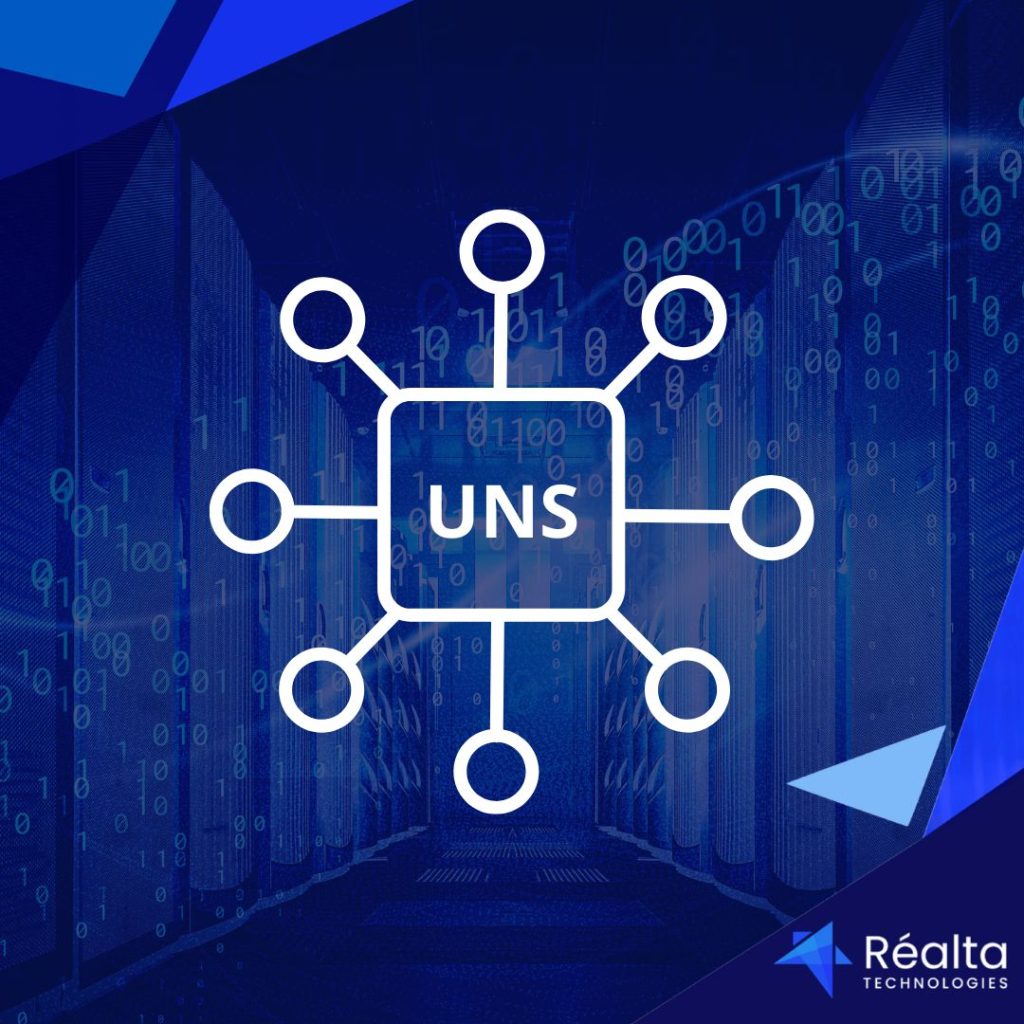
A Unified Namespace creates a structured, real-time view of operational information across the business, providing a common source of truth that can be accessed by multiple systems and users. Rather than creating new connections every time a new dashboard, application or analytics tool is introduced, information is published once and made available to many consumers.
While the benefits of a Unified Namespace are compelling, one of the most common mistakes manufacturers make is attempting to implement it across the entire organisation from day one. The most successful UNS initiatives start much smaller.
What Is a Unified Namespace?
A Unified Namespace is not a software product and it is not simply an MQTT broker.
Instead, it is an architectural approach that provides a structured and governed model of the current state and events occurring throughout a manufacturing operation. It gives operational data context, meaning and consistency, allowing systems to share information more effectively.
Think of it as a shared operational layer that sits between machines, systems and business applications.
When implemented correctly, a Unified Namespace can help manufacturers:
- Improve operational visibility
- Reduce integration complexity
- Enable real-time decision making
- Support analytics and reporting
- Create a foundation for AI and advanced automation
- Connect operational technology (OT) and information technology (IT) environments more effectively
A Unified Namespace can be built using a range of complementary technologies. Many manufacturers already utilise industrial historians such as AVEVA PI System or Canary Labs to collect and store operational data, while modern Industrial DataOps platforms such as HighByte Intelligence Hub help contextualise and model that data for downstream consumers. MQTT brokers such as HiveMQ and integration platforms like Crosser can then help move and orchestrate data throughout the architecture.
Why Many UNS Projects Struggle
One of the biggest reasons Unified Namespace projects fail to gain traction is because organisations focus on architecture before they focus on business value.
Large-scale discussions around enterprise-wide data models, system integrations and future-state architecture can quickly become overwhelming. Before long, the project becomes about technology rather than solving operational challenges.
A better approach is to start with a specific business problem and demonstrate value quickly.
The objective of a pilot project should not be to build the perfect architecture.
The objective should be to solve a real operational challenge while establishing the foundations for future growth.
Start with a Business Problem, Not the Technology
The most successful Unified Namespace pilots begin by identifying a challenge that already exists within the operation.
Examples might include:
- Poor visibility of production downtime
- Inconsistent line-state monitoring
- Manual OEE reporting
- Quality and non-conformance tracking
- Production status visibility
- Excessive spreadsheet-based reporting
These are challenges that people across the business already understand and care about. Solving one of these issues creates immediate value and helps demonstrate the benefits of a more connected data architecture.
Keep the Pilot Small
One of the most important principles when starting a Unified Namespace initiative is to limit the scope.
A pilot should focus on:
- One production line
- One area of the facility
- One operational challenge
- One or two consuming applications
Trying to connect every machine, every system and every department at the outset increases complexity and risk. A smaller pilot allows teams to learn, refine and prove value before scaling further.
For example, a pilot might involve collecting production data into an existing historian such as AVEVA PI System or Canary Labs, modelling and contextualising the data through HighByte Intelligence Hub, and publishing information through an MQTT infrastructure powered by HiveMQ. This allows organisations to demonstrate value without attempting a large-scale enterprise deployment from day one.
Focus on Context, Not Just Data
Many manufacturers already have access to large volumes of data. The problem is that much of this information lacks context.
A machine state value may tell you something happened, but without understanding where it occurred, which product was being produced, which line was affected or what event triggered the change, the information has limited value.
A successful Unified Namespace pilot focuses on creating a structured model that preserves this context. This enables downstream systems, dashboards and analytics platforms to understand and use the information more effectively.
This becomes increasingly important as manufacturers explore AI, predictive analytics and advanced decision-support tools.
Publish Once, Use Many Times
Traditional manufacturing architectures often rely on point-to-point integrations.
As new applications are introduced, new connections are created. Over time, this can result in a complex web of integrations that becomes difficult to maintain and scale. A Unified Namespace takes a different approach.
Information is published once into a shared operational layer and then consumed by multiple systems as required. The same operational data can support:
- Dashboards
- Reporting tools
- Alerting systems
- Workflow applications
- Historians
- Analytics platforms
- Future AI initiatives
This dramatically improves scalability while reducing duplication of effort. Modern integration platforms such as Crosser are increasingly being used to create intelligent data pipelines between OT and IT environments, helping manufacturers move data efficiently between equipment, historians, analytics platforms and cloud applications.
Build the Foundation for Future Growth
One of the greatest advantages of a pilot approach is that it allows organisations to build confidence before expanding.
Once a pilot has successfully delivered value, manufacturers can gradually:
- Add additional production lines
- Connect more systems
- Expand data models
- Refine governance standards
- Introduce additional use cases
- Increase enterprise-wide visibility
This incremental approach creates a much stronger foundation than attempting to design an enterprise-wide solution before any practical value has been demonstrated.
As requirements evolve, organisations can extend their architecture by combining technologies such as HighByte Intelligence Hub for data modelling, HiveMQ for MQTT messaging, and industrial historians such as AVEVA PI Systemand Canary Labs for long-term operational data storage and analysis. This provides a scalable pathway from pilot project to enterprise-wide digital transformation.
Conclusion
A Unified Namespace has the potential to transform how manufacturers manage, share and utilise operational data. However, success rarely comes from attempting to build everything at once.
The most effective approach is to start with a real business problem, keep the scope manageable and focus on delivering measurable value.
By proving success on one line, one area or one operational challenge, manufacturers can establish the foundations for a scalable industrial data architecture that supports future digital transformation, analytics and AI initiatives.
At Réalta Technologies, we help manufacturers design and implement practical digital transformation strategies that deliver measurable operational outcomes. Whether you’re exploring Unified Namespace architectures, industrial data platforms or advanced automation initiatives, our team can help you identify the right starting point and build a roadmap for long-term success.
If you want to unlock more value from your PI System and build a stronger foundation for analytics, AI and digital transformation, speak with Réalta Technologies today.
💻 https://realtatechnologies.com
📞 IRL: +353 21 243 9113 | US: +1 302 509 4401

What does a systems integrator do in regulated manufacturing?
What does a systems integrator actually do in a regulated manufacturing environment? We explore the role across automation, operational data infrastructure, analytics, testing, lifecycle management

How to Choose a Life Science System Integrator Partner
Choosing the right pharmaceutical automation partner requires more than comparing technology and costs. This guide explains how manufacturers in Ireland, the EU and the US

Benefits of Project management when deploying GXP applications in highly regulated manufacturing environment
Manufacturing projects involve multiple stakeholders, complex technologies and strict timelines. Discover how an end-to-end project management service helps reduce risk, improve collaboration and deliver successful
How to Start a Unified Namespace Pilot in Manufacturing
How to Start a Unified Namespace Pilot in Manufacturing
Manufacturers are under increasing pressure to improve visibility, reduce downtime, increase efficiency and make better use of operational data. Yet many organisations still struggle with disconnected systems, siloed information and complex point-to-point integrations.
This is where the concept of a Unified Namespace (UNS) is gaining significant attention.
A Unified Namespace creates a structured, real-time view of operational information across the business, providing a common source of truth that can be accessed by multiple systems and users. Rather than creating new connections every time a new dashboard, application or analytics tool is introduced, information is published once and made available to many consumers.
While the benefits of a Unified Namespace are compelling, one of the most common mistakes manufacturers make is attempting to implement it across the entire organisation from day one. The most successful UNS initiatives start much smaller.
What Is a Unified Namespace?
A Unified Namespace is not a software product and it is not simply an MQTT broker.
Instead, it is an architectural approach that provides a structured and governed model of the current state and events occurring throughout a manufacturing operation. It gives operational data context, meaning and consistency, allowing systems to share information more effectively.
Think of it as a shared operational layer that sits between machines, systems and business applications.
When implemented correctly, a Unified Namespace can help manufacturers:
- Improve operational visibility
- Reduce integration complexity
- Enable real-time decision making
- Support analytics and reporting
- Create a foundation for AI and advanced automation
- Connect operational technology (OT) and information technology (IT) environments more effectively
A Unified Namespace can be built using a range of complementary technologies. Many manufacturers already utilise industrial historians such as AVEVA PI System or Canary Labs to collect and store operational data, while modern Industrial DataOps platforms such as HighByte Intelligence Hub help contextualise and model that data for downstream consumers. MQTT brokers such as HiveMQ and integration platforms like Crosser can then help move and orchestrate data throughout the architecture.
Why Many UNS Projects Struggle
One of the biggest reasons Unified Namespace projects fail to gain traction is because organisations focus on architecture before they focus on business value.
Large-scale discussions around enterprise-wide data models, system integrations and future-state architecture can quickly become overwhelming. Before long, the project becomes about technology rather than solving operational challenges.
A better approach is to start with a specific business problem and demonstrate value quickly.
The objective of a pilot project should not be to build the perfect architecture.
The objective should be to solve a real operational challenge while establishing the foundations for future growth.
Start with a Business Problem, Not the Technology
The most successful Unified Namespace pilots begin by identifying a challenge that already exists within the operation.
Examples might include:
- Poor visibility of production downtime
- Inconsistent line-state monitoring
- Manual OEE reporting
- Quality and non-conformance tracking
- Production status visibility
- Excessive spreadsheet-based reporting
These are challenges that people across the business already understand and care about. Solving one of these issues creates immediate value and helps demonstrate the benefits of a more connected data architecture.
Keep the Pilot Small
One of the most important principles when starting a Unified Namespace initiative is to limit the scope.
A pilot should focus on:
- One production line
- One area of the facility
- One operational challenge
- One or two consuming applications
Trying to connect every machine, every system and every department at the outset increases complexity and risk. A smaller pilot allows teams to learn, refine and prove value before scaling further.
For example, a pilot might involve collecting production data into an existing historian such as AVEVA PI System or Canary Labs, modelling and contextualising the data through HighByte Intelligence Hub, and publishing information through an MQTT infrastructure powered by HiveMQ. This allows organisations to demonstrate value without attempting a large-scale enterprise deployment from day one.
Focus on Context, Not Just Data
Many manufacturers already have access to large volumes of data. The problem is that much of this information lacks context.
A machine state value may tell you something happened, but without understanding where it occurred, which product was being produced, which line was affected or what event triggered the change, the information has limited value.
A successful Unified Namespace pilot focuses on creating a structured model that preserves this context. This enables downstream systems, dashboards and analytics platforms to understand and use the information more effectively.
This becomes increasingly important as manufacturers explore AI, predictive analytics and advanced decision-support tools.
Publish Once, Use Many Times
Traditional manufacturing architectures often rely on point-to-point integrations.
As new applications are introduced, new connections are created. Over time, this can result in a complex web of integrations that becomes difficult to maintain and scale. A Unified Namespace takes a different approach.
Information is published once into a shared operational layer and then consumed by multiple systems as required. The same operational data can support:
- Dashboards
- Reporting tools
- Alerting systems
- Workflow applications
- Historians
- Analytics platforms
- Future AI initiatives
This dramatically improves scalability while reducing duplication of effort. Modern integration platforms such as Crosser are increasingly being used to create intelligent data pipelines between OT and IT environments, helping manufacturers move data efficiently between equipment, historians, analytics platforms and cloud applications.
Build the Foundation for Future Growth
One of the greatest advantages of a pilot approach is that it allows organisations to build confidence before expanding.
Once a pilot has successfully delivered value, manufacturers can gradually:
- Add additional production lines
- Connect more systems
- Expand data models
- Refine governance standards
- Introduce additional use cases
- Increase enterprise-wide visibility
This incremental approach creates a much stronger foundation than attempting to design an enterprise-wide solution before any practical value has been demonstrated.
As requirements evolve, organisations can extend their architecture by combining technologies such as HighByte Intelligence Hub for data modelling, HiveMQ for MQTT messaging, and industrial historians such as AVEVA PI Systemand Canary Labs for long-term operational data storage and analysis. This provides a scalable pathway from pilot project to enterprise-wide digital transformation.
Conclusion
A Unified Namespace has the potential to transform how manufacturers manage, share and utilise operational data. However, success rarely comes from attempting to build everything at once.
The most effective approach is to start with a real business problem, keep the scope manageable and focus on delivering measurable value.
By proving success on one line, one area or one operational challenge, manufacturers can establish the foundations for a scalable industrial data architecture that supports future digital transformation, analytics and AI initiatives.
At Réalta Technologies, we help manufacturers design and implement practical digital transformation strategies that deliver measurable operational outcomes. Whether you’re exploring Unified Namespace architectures, industrial data platforms or advanced automation initiatives, our team can help you identify the right starting point and build a roadmap for long-term success.
If you want to unlock more value from your PI System and build a stronger foundation for analytics, AI and digital transformation, speak with Réalta Technologies today.
💻 https://realtatechnologies.com
📞 IRL: +353 21 243 9113 | US: +1 302 509 4401
What does a systems integrator do in regulated manufacturing?
What does a systems integrator actually do in a regulated manufacturing environment? We explore the role across automation, operational data infrastructure, analytics, testing, lifecycle management
How to Choose a Life Science System Integrator Partner
Choosing the right pharmaceutical automation partner requires more than comparing technology and costs. This guide explains how manufacturers in Ireland, the EU and the US
Benefits of Project management when deploying GXP applications in highly regulated manufacturing environment
Manufacturing projects involve multiple stakeholders, complex technologies and strict timelines. Discover how an end-to-end project management service helps reduce risk, improve collaboration and deliver successful
How to Start a Unified Namespace Pilot in Manufacturing Read More »
